





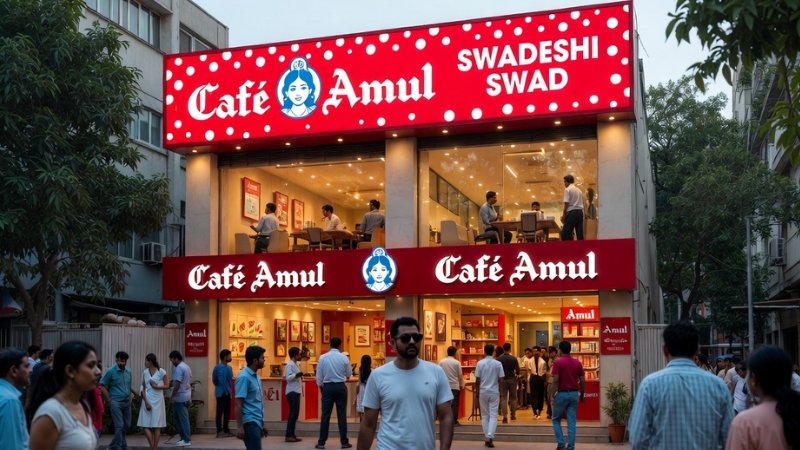
Amul’s store model remains a low-entry option for small business owners in India. With no royalty fees and clear margins, earnings depend mainly on location, daily sales volume, and the mix of products sold.
Starting a small retail business with Amul continues to attract many first-time business owners in India. With an entry cost starting near Rs 2 lakh and no royalty fees, the model remains one of the lowest-cost food retail options in the country as of early 2025.
Amul follows a simple stock-and-sell system. Store owners buy products from approved distributors at a fixed discount and sell them at the printed price. The margin earned after basic expenses belongs fully to the store owner. The company does not charge royalty, revenue share, or monthly franchise fees.
Amul currently supports two main store formats across India.
Smaller outlets, often called Preferred Outlets or kiosks, usually need 100 to 150 square feet of space. These stores are commonly set up near markets, housing areas, railway stations, or busy roads. They sell daily-use products such as milk, curd, butter, paneer, cheese, ghee, and packaged ice creams. The total cost is close to Rs 2 lakh. This includes a refundable security deposit of Rs 25,000, along with basic items like deep freezers and display units that cost about Rs 70,000. The remaining amount usually goes toward initial stock and setup.
The second format is the Amul Ice Cream Scooping Parlour. This option needs a larger space of more than 300 square feet. These outlets focus on items such as sundaes, thick shakes, ice cream sandwiches, and floats. The total investment generally ranges from Rs 5 lakh to Rs 6 lakh. This amount includes brand security, store interiors, and equipment such as scooping cabinets, mixers, and billing systems.
Earnings depend on what the store sells and how busy the location is. Plain milk products usually bring a margin of around 2.5 per cent. Packaged dairy items offer margins between 10 and 20 per cent. Packed ice creams also fall in the same range. Items prepared at the store, such as shakes and sundaes, bring the highest returns, with margins reported near 50 per cent. Store owners say monthly income can range from about Rs 40,000 to as much as Rs 1.5 lakh in high-traffic areas.
To apply, a person must be an Indian citizen, usually over 18 years old. A visible commercial space is required. Documents include PAN card, Aadhaar card, GST registration, and proof of ownership or rent agreement. The proposed site is checked by Amul or its distributor before approval is given.
Once approved, the store owner completes the interior work, installs equipment, places the first stock order, and starts operations. Amul provides store layout guidance, brand material, and basic training on billing and product handling. Only Amul products are allowed to be sold at these outlets. Selling other brands can lead to cancellation of the agreement.
What we know so far
As of 2025, Amul has not announced major changes to its franchise cost or margin structure. The company continues to expand through local distributors and reports steady demand for dairy and frozen dessert products across cities and towns.








Comments are closed