





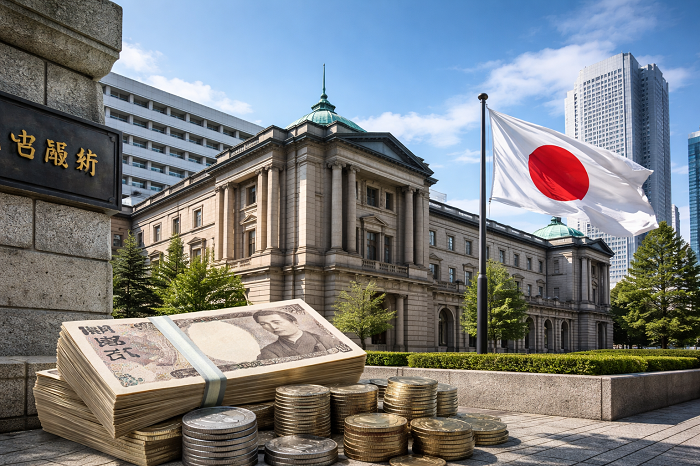
New Delhi, December 2025 – The Bank of Japan (BOJ) has increased its key interest rate to 0.75{3ed7819c3563dca85364f9c966d48c284cd3d43c23a196a6bbb99b5b9eebb247}, the highest it’s been since September 1995. This marks a major step away from its long-standing ultra-low interest rate policy.
Bank of Japan hikes overnight rate 25 bps to 0.75{3ed7819c3563dca85364f9c966d48c284cd3d43c23a196a6bbb99b5b9eebb247}, highest since 1995https://t.co/DgX1luLiwS
— ET NOW (@ETNOWlive) December 19, 2025
The 0.25{3ed7819c3563dca85364f9c966d48c284cd3d43c23a196a6bbb99b5b9eebb247} hike was announced during the central bank’s last policy meeting of the year. The move had been signalled earlier by BOJ officials, so financial markets were largely prepared for the announcement.
Why Japan Raised Rates
Japan had kept interest rates near or below zero for years to support its economy and avoid falling prices. But with prices rising and business activity slowly picking up, the BOJ has started changing its approach. This is the fourth rate increase since Kazuo Ueda became Governor in 2023.
Kazuo Ueda, Governor of the Bank of Japan, is present at the G7 Finance Ministers and Central Bank Governors’ Meeting in Niigata, from 11 to 13 May 2023.https://t.co/otoEobX113 pic.twitter.com/qH1lG6Uson
— Bank of Japan (@Bank_of_Japan_e) May 12, 2023
Even with this change, the BOJ said financial conditions would still stay supportive. Real interest rates are still in negative territory when inflation is considered. The bank added that wages and consumer prices are likely to keep rising steadily, which supports the need for this latest move.
How Markets Reacted
The Japanese yen dropped slightly after the announcement, suggesting that traders had already factored in the decision. The yen slipped 0.3{3ed7819c3563dca85364f9c966d48c284cd3d43c23a196a6bbb99b5b9eebb247} to about 156.02 against the US dollar, while the euro rose to 182.92 yen and the British pound climbed to 208.71 yen.
In contrast, Japanese stocks moved higher, with the Nikkei 225 gaining 1.42{3ed7819c3563dca85364f9c966d48c284cd3d43c23a196a6bbb99b5b9eebb247}. Investors saw the announcement as a sign of clear direction and were encouraged by the BOJ’s confidence in the economy.
Japan’s Economy Still Faces Challenges
Even though inflation is rising, Japan’s economy isn’t growing strongly. In fact, the economy shrunk by 2.3{3ed7819c3563dca85364f9c966d48c284cd3d43c23a196a6bbb99b5b9eebb247} in the most recent quarter, on an annual basis. Still, the BOJ believes the current trend of wage growth and consumer spending supports a gradual shift away from its past approach.
What’s Next?
Looking ahead, the BOJ has not ruled out more rate hikes in 2026. If prices and wages keep increasing steadily, the central bank could raise rates further to keep inflation in check. However, any future changes will likely be slow and measured, given the risks of tightening too quickly.
🚨BREAKING: Bank of Japan is planning to hike rates on the December 19th meeting.
Bloomberg reports that some internal sources say the BOJ is planning to even do more rate hikes in 2026.
This is the reason behind the massive dump we are seeing in the market today. pic.twitter.com/DrdTzaQZ0M
— Bull Theory (@BullTheoryio) December 12, 2025
Key Takeaways
- BOJ rate hiked to 0.75{3ed7819c3563dca85364f9c966d48c284cd3d43c23a196a6bbb99b5b9eebb247} – highest in 30 years.
- Fourth increase under Governor Kazuo Ueda.
- Real interest rates still negative, but inflation rising.
- Japanese yen weakened slightly, stocks rose.
- More hikes possible in 2026 depending on inflation and wages.
Update: December 2025 Snapshot
- Inflation in Japan currently stands at 2.7{3ed7819c3563dca85364f9c966d48c284cd3d43c23a196a6bbb99b5b9eebb247}, according to latest government data.
- Wage growth has shown modest improvement, especially in the manufacturing and services sectors.
- Global investors are watching Japan closely, as shifts in BOJ policy could affect other central banks’ strategies in Asia.



Comments are closed