





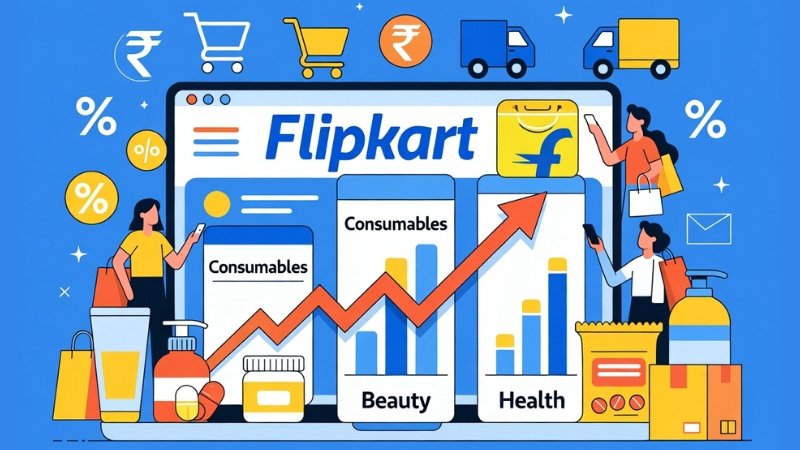
Flipkart’s non-electronics business is growing at a quicker pace than its core electronics segment, led by steady demand in beauty, health, and daily-use products. The company says this shift is coming from smaller cities, low-price items, and wider seller participation.
The Walmart-owned online retailer reported about a 1.5 times year-on-year rise between FY24 and FY25 in health, fitness, and personal care categories during 2025, according to company executives. Baby care, wellness items, books, and home supplies also saw higher sales, helped by local fulfilment and region-based product mixes.
Flipkart said fast-moving consumer goods, especially beauty and personal care, are now among its strongest areas outside electronics. “Both consumables and general merchandise are doing very well. FMCG, in particular, is showing strong numbers, with beauty and personal care at the front,” said Nishant Dalal, senior director and head of beauty, FMCG, and healthcare at the company. He also pointed to higher sales in toys, supported by more local manufacturing under the Make in India programme.
Beauty and grooming drive online demand
Beauty and personal care have seen closer attention over the past year as Flipkart worked on wider brand access and simpler entry for sellers. Dalal said the platform has grown its presence in beauty by adding both well-known and smaller labels and by using creator-led product discovery.
Men’s grooming, though still a smaller slice of the total grooming market, is showing a steady rise online. Dalal said it makes up around 10 to 20 per cent of the grooming category, with demand mainly for basic needs such as oil control, cooling products, and acne care.
Health and wellness sales are also moving up across age groups. Younger buyers are picking items like protein bars, protein cereals, and high-protein breads, while older users are buying more preventive care products. Multivitamins, minerals such as magnesium, and supplements like glutathione are among the items seeing repeat demand, Dalal added.
Smaller cities and sellers add to growth
Flipkart said demand from Tier-2 and smaller cities is rising faster than before, with shopping trends now spreading from large cities to smaller towns within months. Categories such as pet care, toys, musical instruments, and books are seeing more orders from these regions. During the festive season between September and October 2025, more than 20 per cent of orders came from first-time buyers.
Price remains a key factor for shoppers. Over 30 per cent of products sold on the platform are priced below ₹200, with buyers often choosing combo packs and larger packs to save money.
On the seller side, Flipkart has rolled out a zero-commission model for many categories to support small and medium businesses. The company has also lowered return-related costs and brought different charges onto a single dashboard to make billing easier to track, Dalal said.
What we know so far
Flipkart’s consumables and general merchandise business is growing faster than electronics. Beauty, personal care, and health products are the main drivers. Tier-2 cities and first-time buyers are adding a large share of new orders. Sellers, especially small firms, are seeing lower entry and operating costs.
Flipkart’s shift toward daily-use products and non-electronics items is helping it build a stronger base beyond its traditional electronics business, with smaller cities and budget-focused shoppers playing a key role.


Comments are closed